A child once asked, with the honesty only children possess,
“Why don’t we draw people?”
The question was not defiant.
It was curious.
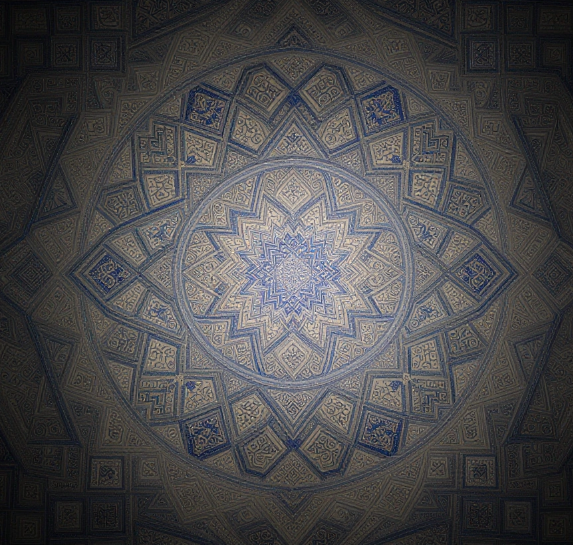
It came from standing in a mosque, eyes tracing geometry that seemed alive, patterns that breathed without breathing, walls that spoke without mouths.
Why flowers, but not faces?
Why light, but not likeness?
The answer is not small.
And it is not fear.
It is love, precision, and a deep knowledge of the human heart.
The First Layer: Guarding the Oneness
At the center of Islam is a single gravity.
Tawḥīd.
Not as an abstract doctrine, but as the axis around which everything turns. The Qur’an returns to it again and again, not because humans forget easily, but because we remember selectively.
Tawḥīd is not merely the statement that God is One.
It is the insistence that nothing else is allowed to quietly take His place.
The Qur’an says, with unsettling clarity:
“And most of them do not believe in Allah except while associating others with Him.”
(Qur’an 12:106)
This verse is not speaking about statues alone.
It is speaking about the subtlety of association. About how belief can coexist with distraction. How devotion can fracture without announcing itself.
The story of the people of Nūḥ is often misunderstood. They did not begin by worshipping idols. They began by remembering the righteous. They made images so they would not forget them. Over time, memory hardened into reverence. Reverence softened into devotion. And devotion crossed a line it no longer recognized.
Islam looked at that arc and did something radical.
It did not wait for corruption to complete itself.
It blocked the first step.
Islamic art turns away from faces because it refuses to let remembrance become replacement. It refuses to let the sign be mistaken for the source. It chooses absence, not because presence is evil, but because presence is powerful.
This is not paranoia.
It is historical literacy.
The Second Layer: Knowing the Human Heart
Islam does not imagine humans as neutral observers.
It assumes something far more honest.
It assumes we attach.
Faces linger.
Eyes stay with us.
Images form relationships without asking permission.
A face can live in the mind long after the wall is gone. It can create longing, comparison, idealization. It can quietly occupy a space meant for real people, or for God.
The Prophet ﷺ said that angels do not enter a house in which there are images. This hadith is often quoted harshly, as if angels are easily offended. But many scholars understood it differently. Not as punishment, but as sensitivity.
Angels belong to a realm of presence, not projection. Where images dominate, presence thins.
Rumi understood this long before neuroscience gave it language. He warned that the eye becomes drunk on form and forgets the wine. Hafiz teased lovers who kissed the cup and missed the drink. Ibn ʿArabī spoke of forms as veils, not because they are false, but because they can stop the seeker too early.
Islamic art listens to this wisdom and makes a choice.
It does not compete with reality.
It steps aside.
By turning away from faces, it gives the heart room to rest. It protects us from carrying too many silent relationships. It acknowledges what modern psychology now confirms. Attention is not free. Attachment is not neutral.
Islam does not assume you are strong.
It assumes you are human.
The Third Layer: Preserving Servitude and Wonder
There is a quieter layer beneath law and psychology.
It is orientation.
The heart has a limited capacity for awe. What we admire shapes us. What we linger on educates our longing.
Islam does not forbid beauty. It disciplines it.
By refusing faces, Islamic art trains the gaze to look through the world, not stop at it. It teaches the eye to travel, not settle. To recognize signs without clinging to symbols.
Ibn ʿArabī wrote that the greatest danger is not denying God, but stopping at a form that once pointed to Him. Islamic art answers this danger not with argument, but with design.
Geometry that repeats without ending.
Patterns that suggest infinity without depicting it.
Calligraphy that bends language into devotion.
Nothing asks to be adored. Everything invites remembrance.
This is not emptiness.
It is alignment.
When art steps back from depicting faces, it returns faces to life. Real people regain gravity. Beauty becomes rarer, heavier, more intimate.
Servitude, in this sense, is not humiliation.
It is clarity of direction.
The Return: What the Absence Gives Back
Something subtle happens when images retreat.
Nature grows louder.
Silence becomes textured.
Prayer feels less crowded.
The world is no longer competing for your gaze. It is cooperating with it.
Islamic art does not erase humanity. It protects it from being flattened into decoration. It refuses to let beauty become consumable. It insists that some things must be encountered, not captured.
When a wall refuses to show you a face, it is not turning away from you.
It is turning you back toward what cannot be framed.
Rumi once wrote that the door you fear is the one that leads home. Islamic art closes one door gently, so another can open.
Not toward nothing.
Toward presence.